

With the redshirt rule causing a mass exodus of Ivy League seniors, Delby Lemieux's appearance in the Senior Bowl is perhaps more important than ever.
Written By
Written By

The Senior Bowl, the premier game on the college football all-star game circuit, will field a rare sight these days: a player representing the Ivy League. No, the Ivy Leagues are not irrelevant. Perhaps they are even more relevant than ever, now that they have begun participating in the FCS Playoffs. However, current trends make the Ivy League’s presence in the Senior Bowl a rarity for the foreseeable future.
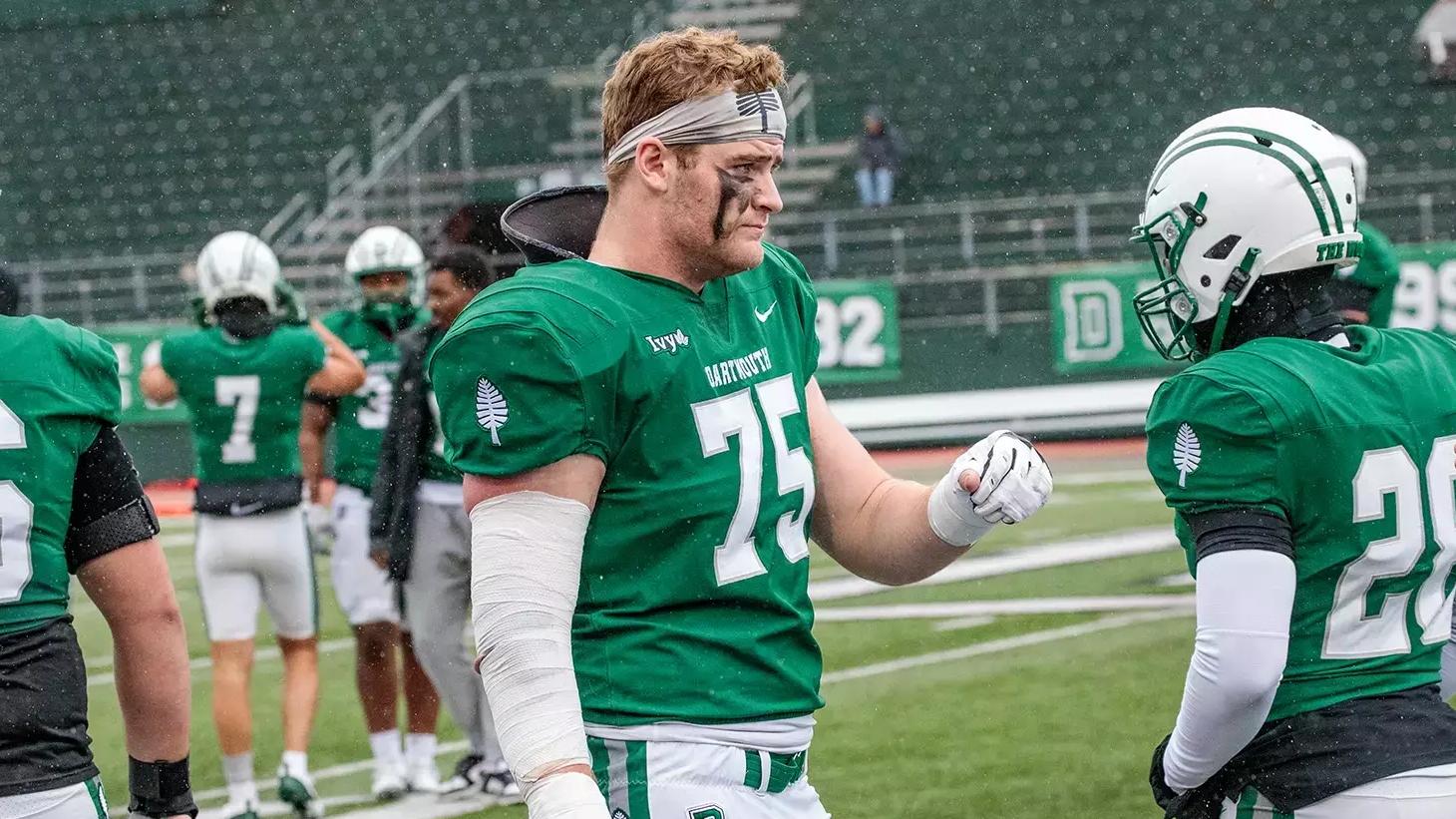
Dartmouth’s Delby Lemiuex becomes the first Ivy League player since 2022 and just the second since 2018 to participate in the Senior Bowl, college football’s premier all-star showcase. The Senior Bowl appearance caps one of the most impressive senior seasons for any lineman in the country. Lemiuex earned First Team All-America nods from the Associated Press and Stats Perform, as well as a Second Team selection from Phil Steele. Steele also awarded Lemiuex Ivy League Offensive Player of the Year, a rare honor for a lineman.
Sights like a player representing an Ivy League school in an all-star game are rare because so many of the conference’s best seniors are transferring out. Who can blame them? The institution of the 2018 redshirt rules, allowing players to redshirt if they play fewer than four games in a season, gives many Ivy League players a redshirt they cannot use at their institutions. Thus, the league’s top Seniors leave once they finish their education, whether to chase pro aspirations or simply play more college football.
The consequences have a significant impact on the league’s visibility in all-star games. Take the East-West Shrine Bowl, for example. Of the six Ivy League players on the Shrine Bowl 1000 preseason watchlist, five transferred to Power Four schools. The lone holdover, Josh Pitsenberger of Yale, ran out of eligibility and did not even receive an invite despite running for 1571 yards in 12 games and becoming a Walter Payton Award finalist.The issue extends beyond the East-West Shrine Bowl.
Two of the other major all-star games, the American and Hula Bowls, neglected to invite an Ivy League player. These two factors combine to diminish the Ivy League’s football prestige. Not even world-class academics could weather the storm of the current college football landscape.
The recent wave of Ivy League transfers to the Power Four and greater FBS may help Ivy League recruiting. However, the lack of representation in major college all-star games, particularly the Senior and Shrine Bowls, diminishes those recruiting gains. This context makes Delby Lemieux’s representation of Dartmouth in the Senior Bowl refreshing. Lemieux proves that players can still start and finish their careers in the Ivy League and maintain their draft stock. His participation is a subtle reminder of the Ivy League’s national relevance.
College football arguably needs the Ivy League more than ever in a landscape where the student aspect of the term “student-athlete” loses its significance daily.While Lemieux’s Senior Bowl participation may not be one of the most prominent storylines of the Senior Bowl, it provokes discussion of the Ivy League’s niche in this unprecedented college football landscape.