Written By
Written By
Written By
Written By

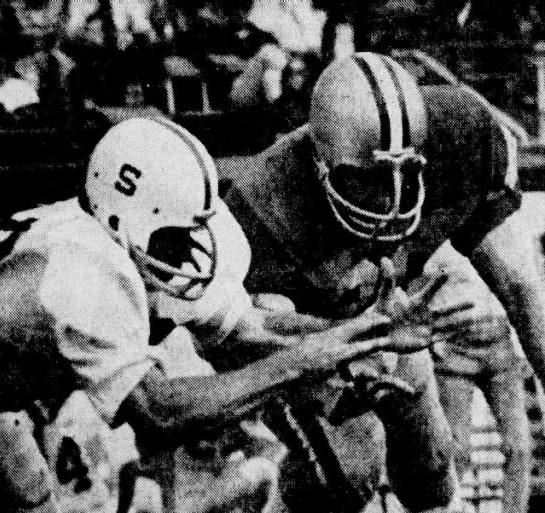
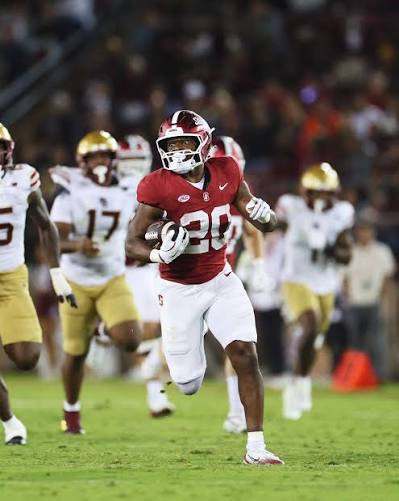
Last week’s early-season TV release had its fair share of surprises and milestones, such as MAC schools landing on Big Noon Kickoff and questionable FCS Week Zero showcases. One overlooked aspect of the releases comes from the September 19th ACC showdown between Duke and Stanford.
The CW landed the “Brain Bowl” between two of the FBS’ most prestigious academic institutions. Many may not realize that this is not the first time the two have played on over-the-air (antenna) TV. Fifty-four years ago, ABC picked up the game before the 1972 season as part of its college football slate.
The 1972 Duke-Stanford game had everything one could ask for from a non-conference game at the time. The intersectional novelty combined with the storyline of Stanford seeking payback on the Blue Devils. The previous year, the #19 Blue Devils upset the eventual Rose Bowl-champion #10 Cardinal 9-3.
However, both teams went in opposite directions after the result. Duke finished 6-5 while the Cardinal pulled one of the greatest upsets in Rose Bowl history, driving 64 yards in the final two minutes to upset #4 Michigan 13-12.
This context made the game an easy choice for ABC. The network aired the game alongside a regional slate that included Nebraska-Army, Georgia-Tulane, and Bowling Green-Miami. Once again, Stanford and Duke played a low-scoring battle. The Cardinal won 10-6, thanks to four squandered red zone opportunities by the Blue Devils. Unlike 1971, Stanford joined Duke in mediocrity, finishing 6-5 to the Blue Devils’ 5-6 record.
While the two met again in 2011 and 2012, the games took place on cable. ESPNU handled broadcast duties in 2011, and the Pac-12 Network aired the game in 2012. The disparity between the two programs was the main catalyst for this. Duke would not play in a bowl from 1995 to 2012, while Stanford played in four consecutive bowls from 2010 to 2013.
This year, fans hope for more offensive firepower between the two than the 1971 and 1972 meetings had. Still, Stanford and Duke’s reappearance on broadcast TV represents a strange juxtaposition.
In 1972, the matchup represented the novelty and mystique of intersectional matchups. Now, the two are conference mates playing on an over-the-air network that would not exist for another three decades after their last time on the broadcast TV airwaves. Welcome to FBS football in 2026.