
Written By
Written By
VMI leverages alumni-backed sponsorships and broad NIL deals to fund athletics, support diverse cadet-athletes, and stay competitive at the Division I level.
Written By
Written By

The landscape of NCAA Division I athletics has never been more financially demanding. With the recent House v. NCAA settlement ushering in a world where major athletic departments can share over $20 million annually directly with athletes, mid-major programs and senior military colleges face an uphill battle. Institutions outside of the Power Four such as VMI must figure out how to compete without the cushion of a massive Power 4 television contract.
Yet, true to form, the Keydets are not backing down. They are adapting.
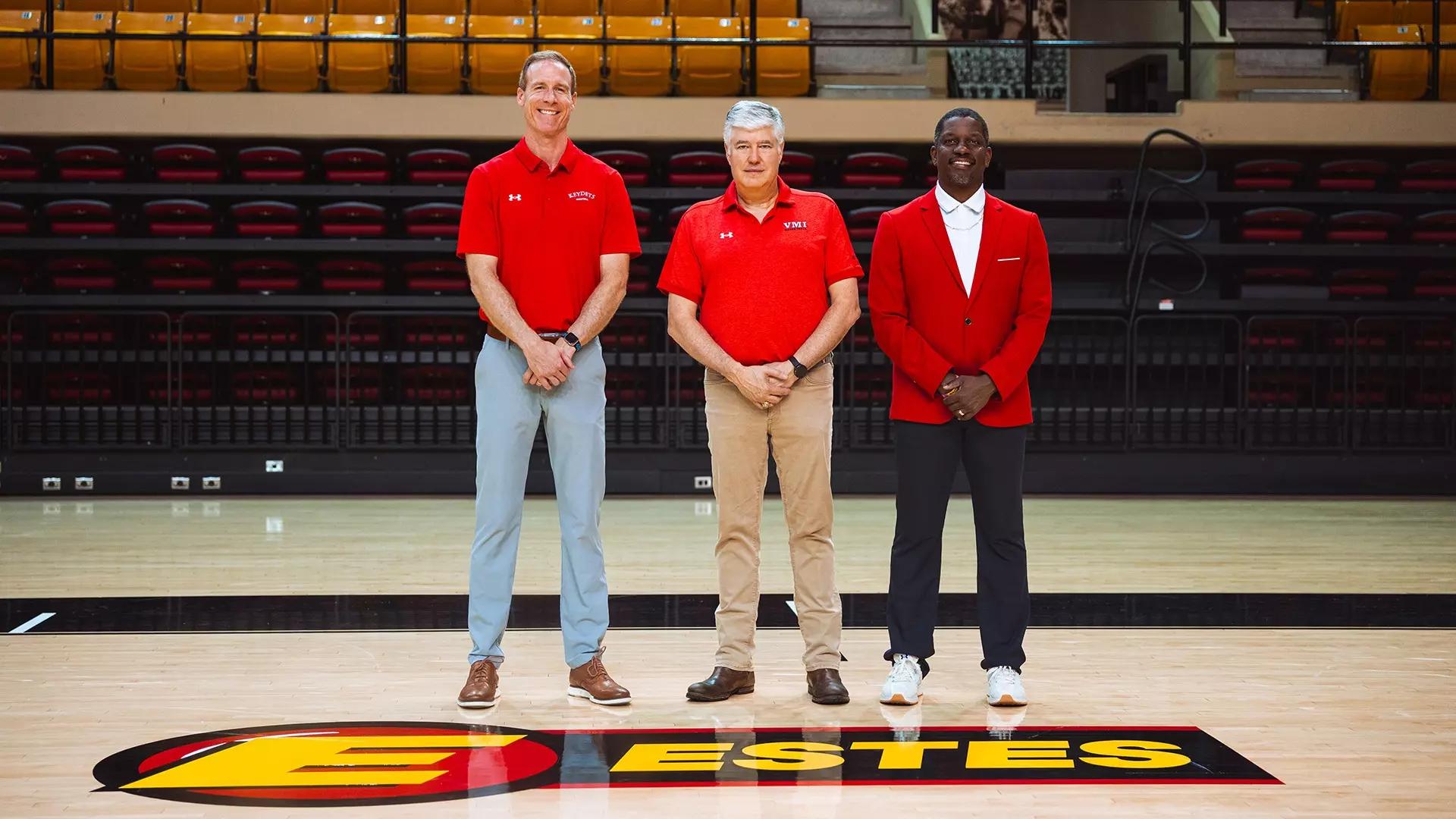
In a pair of major announcements, VMI Athletics has secured a multi-year corporate court sponsorship with Estes Express Lines for its basketball program, along with a multi-sport Name, Image, and Likeness (NIL) partnership with Promino Nutritional Sciences.
These deals represent a highly strategic blueprint for navigating the modern sports economy for a school built on a strict legacy of military discipline. Most importantly, the moves carry significant meaning for the university.
Starting this season, fans inside Cameron Hall and viewers tuning in on ESPN+ will see Estes Express Lines logos displayed on the basketball court. While college basketball has permitted on-court sponsors since the mid-1990s, the practice has surged recently as athletic departments scramble to uncover alternative revenue streams.
Traditional booster donations must now stretch further than ever to cover rising operating costs for schools such as VMI. VMI Director of Athletics Jamaal Walton is generating sustainable corporate-backed revenue without relying solely on individual donors by monetizing high-visibility physical real estate like the arena floor.
Crucially, this is not just a transactional advertising buy. VMI is capitalizing on its most potent asset: a fiercely loyal alumni network. The Hupp family mostly built Estes Express Lines. Their ties to the Institute span three generations and 86 years. Steve Hupp (Class of 1984, CFO) and Billy Hupp (Class of 1977, Executive VP) are directly weaving their corporate success back into their alma mater. In fact, the connection is deeply personal for Walton, who attended VMI on a scholarship funded by Billy Hupp.
This is the survival blueprint for mid-majors. Success lies in converting alumni corporate clout into direct athletic backing to ensure facilities and programs remain competitive.
While the Estes deal shores up institutional infrastructure, the Promino Nutritional Sciences agreement reveals a savvy approach to the player-acquisition side of the modern ledger.
Rather than relying on a localized booster collective to funnel cash exclusively to a star quarterback or point guard, VMI secured a broad-based NIL engagement. Promino has signed eight cadet-athletes across a diverse range of sports:
These athletes will serve as brand ambassadors for Promino's NSF Certified for Sport amino acid formulations.
This multi-sport approach perfectly aligns with the distinct culture of a military college. At VMI, every cadet balances a grueling physical, military, and academic lifestyle regardless of whether they play on Saturdays or compete in the pool. By securing an NIL deal that rewards athletes across multiple programs, VMI sends a clear message to recruits: you do not have to play a major revenue sport to find tangible NIL value in Lexington.
Promino CEO Vito Sanzone noted that VMI's reputation for discipline and intensity made it the ideal launchpad for the company's formal NCAA Athlete Platform. VMI is effectively turning its demanding institutional culture into a highly marketable asset for national corporations.
The financial realities of modern college sports are unforgiving for institutions outside the Power 4. This is especially true for military schools, where strict compliance, mandatory military lifestyle, and rigorous physical demands already limit the recruiting pool.
However, VMI is proving that mid-majors do not have to be passive victims of conference realignment and the open market.
By aggressively monetizing facility space through deeply rooted corporate partnerships and securing national NIL deals that validate the unique grit of their cadet-athletes, Walton and his administration are building a resilient, self-sustaining financial model.
Tradition alone is no longer enough to survive in the current NCAA landscape. VMI is showing the rest of the country that it has the business acumen to match its storied history.