Written By
Written By
Written By
Written By



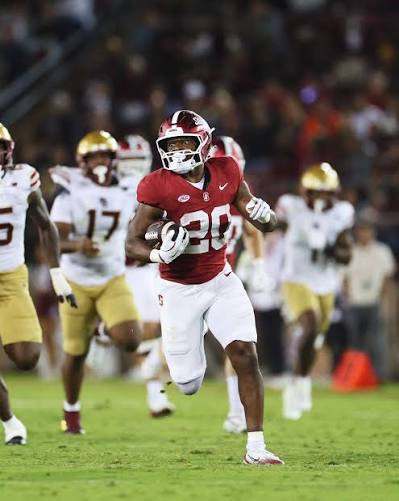
Long ago, Harvard and Chicago were two of college football’s original bluebloods. Amos Alonzo Stagg manned the sideline for over four decades at Chicago and led the Maroons to 12 Western Conference titles and two national championships. The Crimson won seven national titles and appeared in one Rose Bowl in the first five decades of the sport’s history. It is impossible to document college football’s formative years without mentioning either school.
While Chicago played Harvard’s eastern contemporaries Penn and Princeton a combined 13 times (including for the first cross-country college football radio broadcast in 1922 against Princeton), it only played Harvard twice. Both meetings came after both programs’ peaks in 1938 and 1939. Stagg had stepped down by 1932, and Chicago would leave the Big Ten entirely in 1946. Harvard was two decades removed from its last national title. There has never been any thought of these two early Goliaths meeting on the gridiron until now.
Last Thursday, the University of Chicago announced it was hosting, yes, hosting Harvard in men’s basketball. The Maroons’ press release summarizes the gravity of such an event. This is Chicago’s second home game against a Division I school since hosting Brown in January 1970 and just the third occurrence since 1946. Overall, it is just the fifteenth time since 2000 that a Division III school will host a Division I school in men’s basketball.
Although the chances of a gridiron reunion are rare, this basketball meeting gives some hope. The Crimson’s recently aggressive non-conference scheduling also adds to this.
While Harvard would reasonably host the Maroons in a one-off, a home-and-home could be in play as well. The Crimson recently announced a bevy of future intersectional matchups this offseason, scheduling series with UC-Davis, Montana State, and Richmond. Harvard also had a return visit to St. Thomas in St. Paul, MN previously scheduled for 2029. While it is disingenuous to compare Chicago’s level of play to any of these schools, the travel is on par with Harvard’s new scheduling philosophy.
An FCS school hosting a Division III school may lead to an uninteresting game, but Harvard recently scheduled a home-and-home with one of the FCS’s worst schools. The Crimson hosted Stetson in 2024 and traveled to DeLand the following year. In 2024, Stetson ranked 379th in Bill Connelly’s S&P rankings across all divisions, the second-worst FCS school and only ahead of 416th-ranked Marist. The following year was much of the same. The Hatters were the sixth-worst FCS school in Connelly’s rankings at 372 and only 21 spots above the worst FCS school. Chicago was not too far off at #478.
The results were predictable. The 2024 game ended in a 35-0 Stetson loss, and the following year was a 59-7 Harvard drubbing. The 2025 game could have been much worse. The Crimson led 28-0 at the end of the first quarter and 45-0 at halftime. If competitiveness were a concern for Harvard’s non-conference schedules, it would not have scheduled the Stetson series. A game with Chicago could not be much worse.
Furthermore, other non-scholarship FCS programs have played Division III schools recently. Last season, Valparaiso hosted Adrian, while Butler completed a home-and-home with Hanover in 2024 and 2025.
If Harvard were to visit Chicago, New Stagg Field’s tiny 1,650-seat capacity is a concern. The Maroons would likely have to move the game to SeatGeek Stadium, which carries a rental fee of $25,000 and a non-refundable deposit of $25,000. Despite Harvard’s strong alumni presence in the Windy City, the University of Chicago would be unlikely to break even hosting the Crimson.
Another issue is the Ivy League’s participation in the FCS Playoffs. The Ivy League seems to stand firm on having a 10-game schedule. This means there are only three chances to build a non-conference resume for a potential at-large bid. While Chicago is a peer institution, it seems hardly beneficial for Harvard to limit itself to two opportunities to impress the playoff committee outside of Ivy League play.
With this in mind, the dream of Chicago reliving its Stagg Era glory days for just one weekend seems dead. Still, Harvard and Chicago’s meeting on the hardwood brings the most hope for a gridiron reunion in over eight decades.