Written By
Written By
Regional sports networks are dying but a potential appearance on one could pay dividends for two struggling programs with low enrollments.
Written By
Written By

The recent announcement of the shutdown of the FanDuel Sports Networks marks the end of an era in sports broadcasting that seemed unimaginable at the height of the cable boom. After years of gradual liquidations and closures, Main Street Sports, owner of the 14 remaining FanDuel Sports Networks announced the FanDuel Sports Networks would cease operations at the end of the NBA and NHL seasons.
Cord-cutting and the streaming doomed regional sports networks (RSNs) over the years. Before pro sports franchises abandoned RSNs, college sports migrated to streaming platforms such as ESPN+ and FloSports. Only regional sports networks backed or owned by the franchises they broadcast have firm footing. Nevertheless, regional sports networks can still provide some schools a boost.
This is the case with the University of Rio Grande and West Virginia State University. Both schools will play one of the Northeast Conference's Pittsburgh metro-area schools. Robert Morris will host West Virginia State on September 5th, while Duquesne hosts Rio Grande on September 26th. Sportsnet Pittsburgh, the television home of the Pittsburgh Pirates and Penguins, aired five home games from both Duquesne and Robert Morris last season. The ten-game slate marked the most robust programming load for the network since it began partnering with the NEC.
The agreement simulcasted games on the network and NEC FrontRow, the conference's in-house streaming service. Sportsnet Pittsburgh's deal covered every home game from both schools upon announcement, including every Robert Morris home game and all but one Duquesne home game. The Duke's home opener against Lincoln (PA) occurred before the deal started.
Despite the simulcast, the agreement provides both credibility and more reach to casual fans for Rio Grande and West Virginia State.
While there is some overlap between fans of Pittsburgh's pro teams and those of Duquesne and Robert Morris, the two schools garner little attention in the city's sports landscape. The ability to serve as lead-in programming to a September Pirates game is a significant advertisement for both schools. This effect extends to Rio Grande and West Virginia State.
Both schools have small, mostly in-state student bodies. As of the 2024 academic year, 91 percent of West Virginia State's student body came from within the state. Similar statistics are unavailable for the University of Rio Grande, but one can assume the same of its small 2,641-student population across it's four-year and community college programs. Appearing on Sportsnet Pittsburgh advertises the university to the Pirates' greater home market, which Sportsnet Pittsburgh claims to reach Pennsylvania, Maryland, and parts of New York.
Furthermore, linear television gives both programs legitimacy. Sure, one can watch any college football game on a given Saturday if they have the money and technology to do so. However, there is an unlimited supply of streaming spots. The opportunity cost associated with a linear television spot that streaming lacks, gives it more credibility. A channel such as Sportsnet Pittsburgh takes a calculated risk with any broadcast decision it makes due to the limited availability.
This provides cachet for both Rio Grande and West Virginia State to the Pittsburgh Pirates fan who stumbles across their games against Robert Morris and Duquesne. Both schools' football programs desperately need the credibility and advertisement of an appearance on an RSN.
West Virginia State is the sole Division II HBCU outside of the Central Intercollegiate Athletic Association (CIAA) and Southern Intercollegiate Athletic Conference (SIAC). This means they miss out on the appearances on HBCUGo and TheGrio's syndicated package.
In fact, the Hornets have not appeared on linear television in a pair of appearances on local West Virginia stations WOWK and WVVA in 2019. The closest thing to a linear television appearance since then was former wide receiver Keedrick Cunningham's appearance in the ill-fated HBCU Pigskin Showdown that aired on CNBC in 2022, where he caught a pass for 16 yards and ran the ball once for a yard.
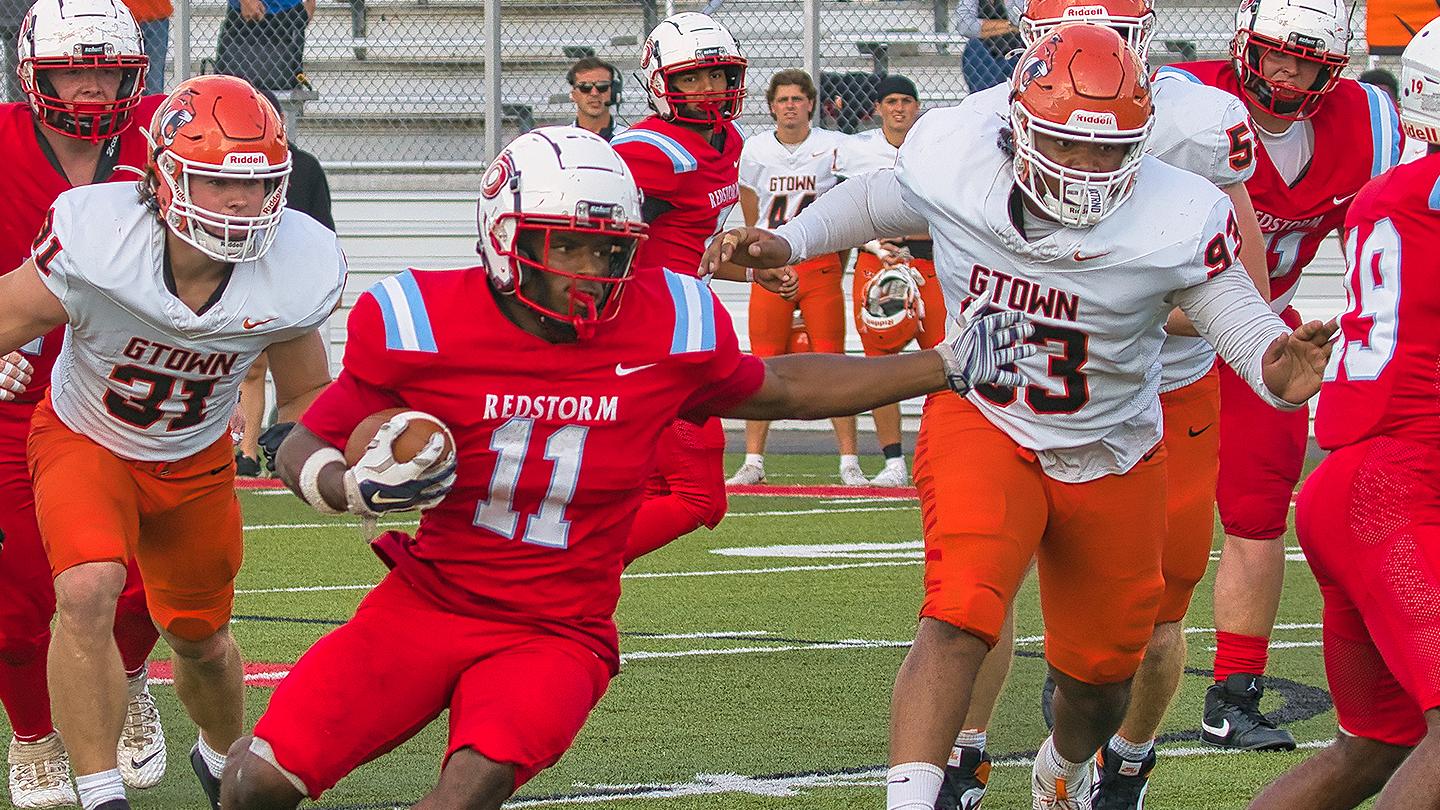
Rio Grande may need this close-up even more. The Red Storm returned to football last season after a 76-year hiatus in 2025. The Red Storm had a miserable season, going 0-9 averaging five points per game and 130 yards on offense. Opponents shut Rio Grande out in five of their nine contests, including a 76-0 loss at the hands of mighty Ferris State. Simply appearing on linear television is a victory alone for a program with one of the most depressing inaugurations imaginable.
The sports broadcasting landscape is much different than when regional sports networks such as Sportsnet Pittsburgh thrived. Nonetheless, Rio Grande and West Virginia State fans can find excitement and opportunity through this outdated medium that is barely surviving.