Written By
Written By
It seems strange, but Dylan Carson is just the 3rd Air Force fullback to appear in an All-Star game in program history.
Written By
Written By

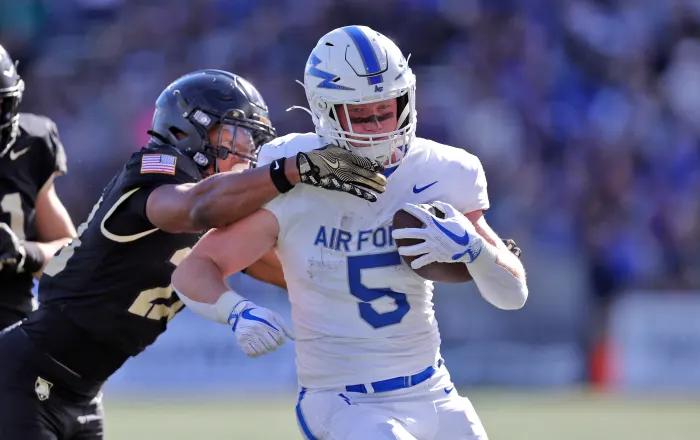

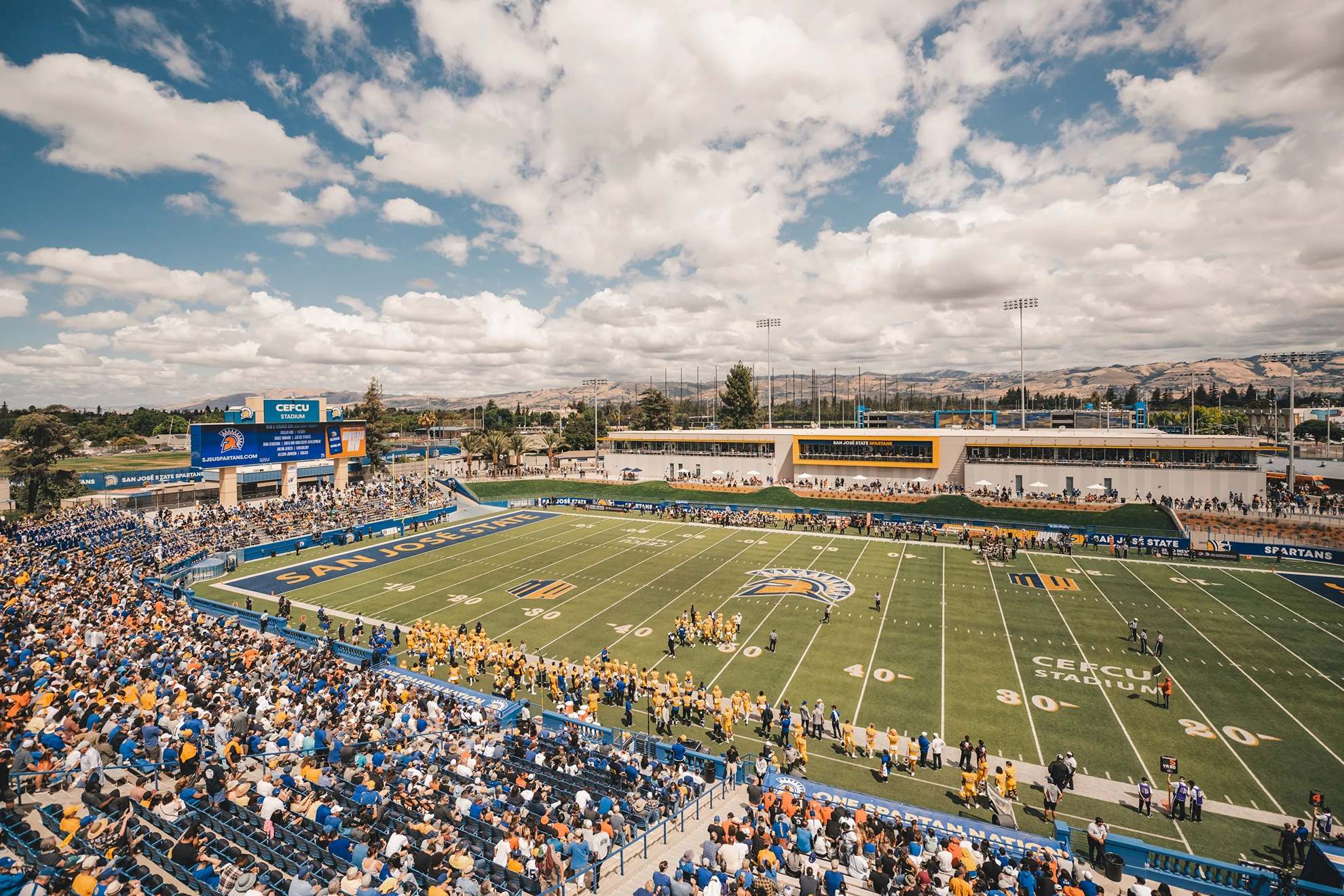
Air Force's Dylan Carson caps off a productive career for Air Force when he participates in Sunday's Dream Bowl. Carson was a consistent contributor on Air Force offenses in transition the last two years, running for 1511 yards in his career and eleven touchdowns in his career.
He exceeded the 100-yard mark in six career games, including twice against Boise State. Like most fullbacks Air Force uses, Carson has running back-like traits that translate well to the pro game. Surprisingly, Carson finds himself in rare company.
While Air Force has ran the triple option since 1979, they have only sent two fullbacks to all-star games, one in the triple option era. The Falcons have sent multiple great running backs to all-star games like Leotis Palmer, who ran for 556 yards on 5.6 yards per carry and threw two touchdown passes for the 2002 Air Force team that peaked at #18, and Anthony LaCoste, who had 1389 all-purpose yards in 2013, but hardly any fullbacks.
Not even Brad Roberts, despite leading the FBS in rushing in 2022 with 1728 yards, got an all-star game nod presumably due to the perception he could not fit into an NFL scheme.
In addition to perceived lack of scheme fit in the pro game, Air Force's triple option tends to be more quarterback and halfback driven. Game breaking quarterbacks like Chance Harridge, Dee Dowis, and Beau Morgan come to mind for football fans, while running back Chad Hall ran for 1478 yards in 2007, a feat that slotbacks rarely achieve at the other Service Academies. Thus, scouts and media tend to overlook Air Force's fullbacks.
Monte Moorberg and John Kershner were the two fullbacks to precede Carson in all-star games. Moorberg earned a spot in Phoenix's short-lived Copper Bowl all-star game after the 1960 season. Moorberg earned the nod after running for 756 yards and four touchdowns in his career, with all but 21 of those yards coming in his junior and senior years. Moorberg's contributions extended far beyond football as he gave his life in service to the country. He died when his Thunderchief crashed over North Vietnam on December 2, 1966.
To date, John Kershner is the last Air Force fullback to play in an all-star game when he earned nods to the Hula and Japan Bowl after the 1983 season. Kershner ran for 2,756 yards and 20 touchdowns in his career in Ken Hatfield's wishbone offense. After running for 1056 yards in 1982, Kershner earned third team All-American honors from College Football News in 1983 with 934 rushing yards and eight touchdowns.
Kershner was a steady contributor in Air Force's back-to-back bowl wins over SEC teams in 1982 and 1983. In the Hall of Fame Bowl in 1982, Kershner ran for 132 yards and a touchdown on 32 carries in a 36-28 win over Vanderbilt. The next year, he ran for 58 yards on 15 carries in a low-scoring 9-3 win over Mississippi in the Independence Bowl. While his stats for the Japan Bowl are unavailable, he ran three times in the Hula Bowl for two yards.
With a strong performance, Dylan Carson can do more than increase his pro chances. He can blaze a new trail for future Air Force fullbacks to appear in all-star games. Carson hopes to build on the contributions of Moorberg and Kershner to usher in a new era for Air Force fullbacks.
The 2024 Air Force Football Media Guide was a significant aid to my research. Read it here.