

Written By
Written By

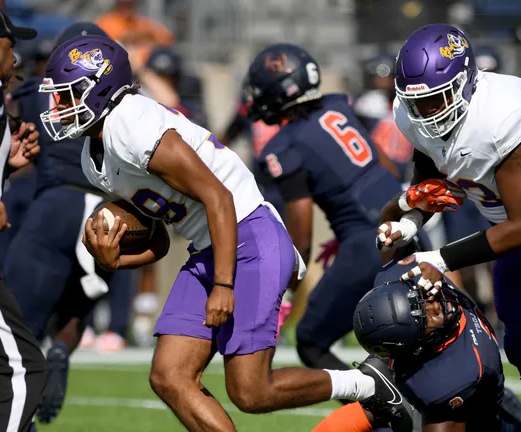
More than a week passed, and Mississippi Valley State still did not have an opponent for the Chicago Football Classic. The wait grew more suspenseful. Or maybe it was embarrassing. Whatever it was, it was definitely symptomatic.
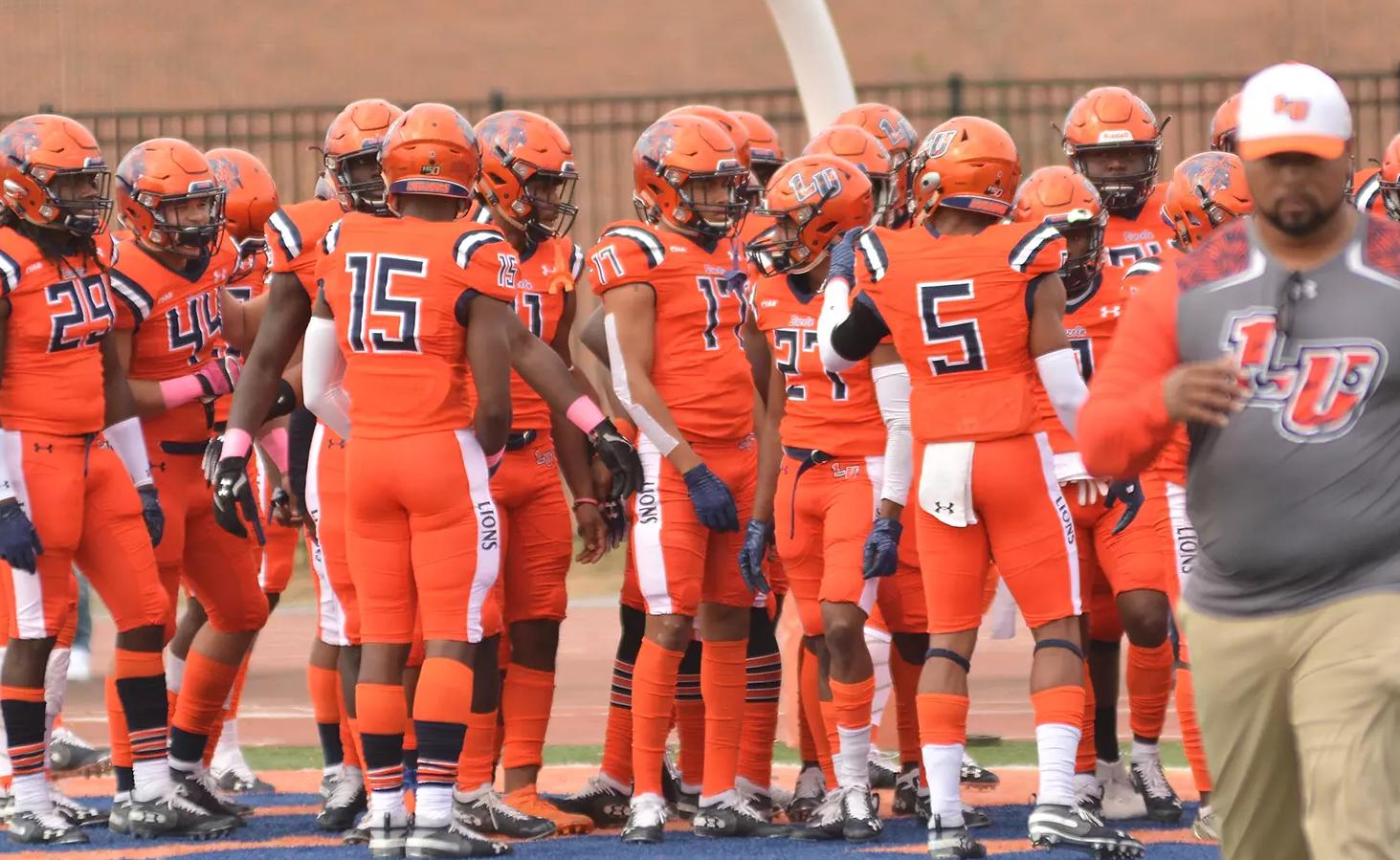
Finally, nine days after Mississippi Valley State first announced its participation in the Chicago Football Classic, it found its match. Moribund Lincoln University (PA) agreed to face the Delta Devils on September 12th. Make no mistake, the Lions will cherish this opportunity, the program's first in a major HBCU classic since reviving its program in 2008. However, their selection shows the declining stature of the Rust Belt's HBCU classics.
Games like these require fan bases that travel well. Lincoln has one of the smallest fanbases in Black College Football. Not only did the Lions average 1,720 fans in their three home games, but 22 of their 78 home games (28 percent) since 2008 have seen fewer than 1,000 fans attend. The Lions will probably not garner much local buzz either. Lincoln has not had a winning season in their last 24 seasons of play, dating back to 1954.
Mississippi Valley State is not much of a headliner either. The Delta Devils have not had a winning season since 2006, winning more than three games just twice in that span, and amassing a 37-166 record.
There was a time in the 2000s when three of the Rust Belt's largest cities had much-anticipated HBCU Classics. Games at Chicago, Cleveland, Detroit, and Indianapolis helped ring in the Black College Football season. HBCU titans such as Grambling, Southern, and Florida A&M played in these games. Now, after years of failures and revivals, the Rust Belt's classics might have their days numbered.
The Detroit Football Classic's return is likely a one-year phenomenon. The Circle City Classic in Indianapolis has a date, but no matchup. The Chicago Football Classic features two of the most overlooked HBCU programs this year.
How did things get this bad?
The landscape facing many FBS bowl games today, one that necessitates adaptation, faces the three classics mentioned. Finances lead the way, and the hubris of these classics could be holding them back as well. These classics have fallen into a cycle where they cannot provide the money or even the exposure to grant value to programs in a money-driven age. A look at the contracts conveys this truth.
The Circle City Classic offers arguably the worst deal of the three Midwestern Classics or arguably any neutral-site HBCU classic in the country. The Classic's payout of $145,000 lags behind the Chicago City Classic and Mobile's Port City Classic's $300,000 clip. The $145,000 payout quickly becomes a moot point after the contract stipulates that universities are responsible for travel, lodging, food, and other expenses related to the event.
The Chicago Football Classic offers a better deal than its Indiana counterpart. The game offers the aforementioned $300,000 payout and $25,000 worth of tickets for the university to sell, but the logistical arm of the classic leaves much to be desired. Although the classic pays for travel and lodging for schools, then-Mississippi Valley State head coach Kendrick Wade notably called the Chicago Football Classic, "worst travel experience of his coaching career" after the Delta Devils played in the 2023 edition. One could argue that the Classic fixed those issues in 2024, but there is reason to believe the logistical issues remained, given the lack of a game in 2025.
Furthermore, both the Circle City and Chicago Football Classic own the media rights to their games. This is a hit-or-miss strategy. In 2023 and 2024, ESPN+ streamed the Circle City Classic. In 2025, the Circle City Classic did not have a video broadcast. The same applied to the last Chicago Football Classic.
In 2023, HBCUGo streamed and syndicated that classic. In 2024, there was no video broadcast. Why would any school want to play a game in 2026 that is neither streamed nor televised linearly? These classics once had BET, ESPNU, and NFL Network air time. Now, fans must tune their radios or look at drive charts just to follow them. The first step to restoring these classics is to swallow one's pride and relinquish the television rights to the conferences.
The attendance of these classics is the most noticeable sign of their decline. 3,000 fans saw Morgan State play Miles in the 2025 Circle City Classic. 2018 was the last time that classic drew at least 11,000 fans. 5,823 fans saw Morehouse beat Kentucky State in the 2024 Chicago Football Classic. 2019 was the last time the Chicago Football Classic attendance exceeded 10,000. Finally, the first Detroit Football Classic in 21 years drew an embarrassing crowd of 1200 fans to Ford Field last year.
These figures convey a simple truth. Asking mostly Southern and mid-Atlantic-based schools to give up a home game to cater to pockets of fans is a difficult request, especially when the payout is uncompetitive. The only schools that benefit from these games are those that more lucrative classics overlook, and with home stadiums and fanbases too small for them to match the payouts these midwestern classics offer. That is how you get Mississippi Valley State playing Lincoln and Central State in Chicago.
Furthermore, there are alternatives to these classics. If a school wants to play in Chicago, it can schedule a home-and-home with the Cougars. North Carolina A&T did. The Aggies will likely make more than the $300,000 payout of the Chicago Football Classic through gate receipts and concessions when they host the Cougars this year. Paycheck games with the MAC are another alternative to Rust Belt classics. Bethune-Cookman earned $325,000 to play Western Michigan in 2024.
The only way for these classics to remain profitable for the schools they attract is for them to downsize. For instance, the rent at Ford Field is a whopping $425,000. That is an unrealistic fee for an event like the Detroit Football Classic, which drew 1,200 fans. Likewise, the Chicago Football Classic can move to SeatGeek Stadium, the 20,000-seat former home of the Chicago Red Stars and Fire. This venue would have been able to accommodate every Chicago Football Classic since 2017. The Circle City Classic can occur at IU-Indy’s soccer stadium, which seats 12,100 fans.
HBCU classics like the ones in Rust Belt cities are wonderful experiences for fans to see their team play in a big-time environment. However, the finances and lack of exposure continue to be difficult for many programs to justify. Hopefully, these games continue to find ways to survive in some form.
Special thanks to Mississippi Valley State for being one of the few schools to approve my FOIA requests. Go Delta Devils!